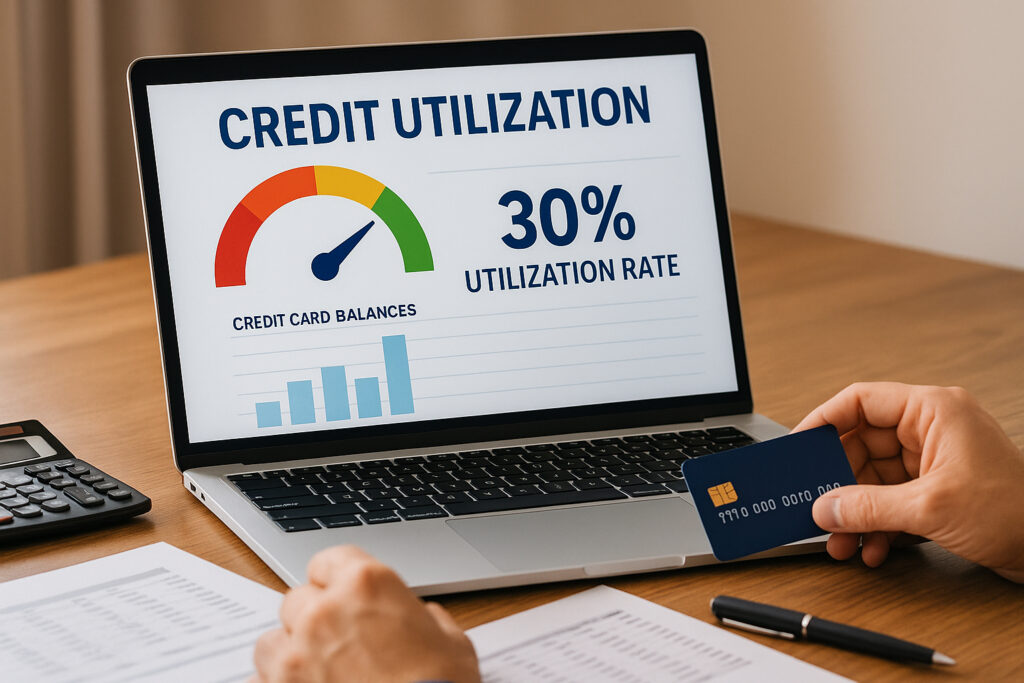
Your credit score reflects how well you manage borrowed money—and one of the most important factors is your credit utilization ratio. This ratio measures how much of your available credit you’re using. Financial experts recommend staying below 30% to maintain a healthy score. Understanding this rule can help you control debt and improve your overall financial standing.
What Is Credit Utilization?
Credit utilization is the percentage of your available credit that you’re currently using. For example, if you have a total credit limit of ₹1,00,000 and your balance is ₹30,000, your utilization rate is 30%. It applies to both individual cards and your total credit usage across all accounts.
Why the 30% Rule Matters
Credit scoring models, such as FICO and VantageScore, weigh utilization heavily—usually around 30% of your total score. High utilization signals risk to lenders, even if you make on-time payments. A low utilization rate, on the other hand, shows responsible credit behavior and enhances your chances of securing loans at favorable interest rates.
How to Maintain a Low Utilization Rate
-
Monitor Balances Regularly
Check your credit card statements frequently to ensure balances don’t creep up unexpectedly. Online apps can help track spending and utilization in real time. -
Pay More Than the Minimum
Reducing your balance before the billing cycle closes can lower your reported utilization, improving your score. -
Request a Higher Credit Limit
If used wisely, a higher limit can instantly reduce your utilization ratio without extra spending. -
Spread Purchases Across Cards
Instead of charging everything to one card, distribute expenses to maintain lower individual utilization rates. -
Avoid Closing Old Accounts
Old credit lines increase total available credit, helping keep your utilization percentage lower.
The Danger of High Utilization
Consistently maxing out credit cards—even if you pay on time—can hurt your score and signal over-reliance on credit. It may also affect loan approvals and raise interest rates on future credit offers.
Smart Credit Habits for the Long Term
-
Set payment reminders or automate payments.
-
Review credit reports regularly for accuracy.
-
Use credit as a tool, not as an extension of income.
Conclusion
The 30% rule isn’t just a guideline—it’s a key to maintaining financial health. By keeping your credit utilization low, you project stability and responsibility to lenders. Consistent, mindful credit management can boost your score and open doors to better financial opportunities.