Improving your credit score is a practical process that rewards consistent habits.
Small adjustments to payment timing, balances, and credit use compound over months.
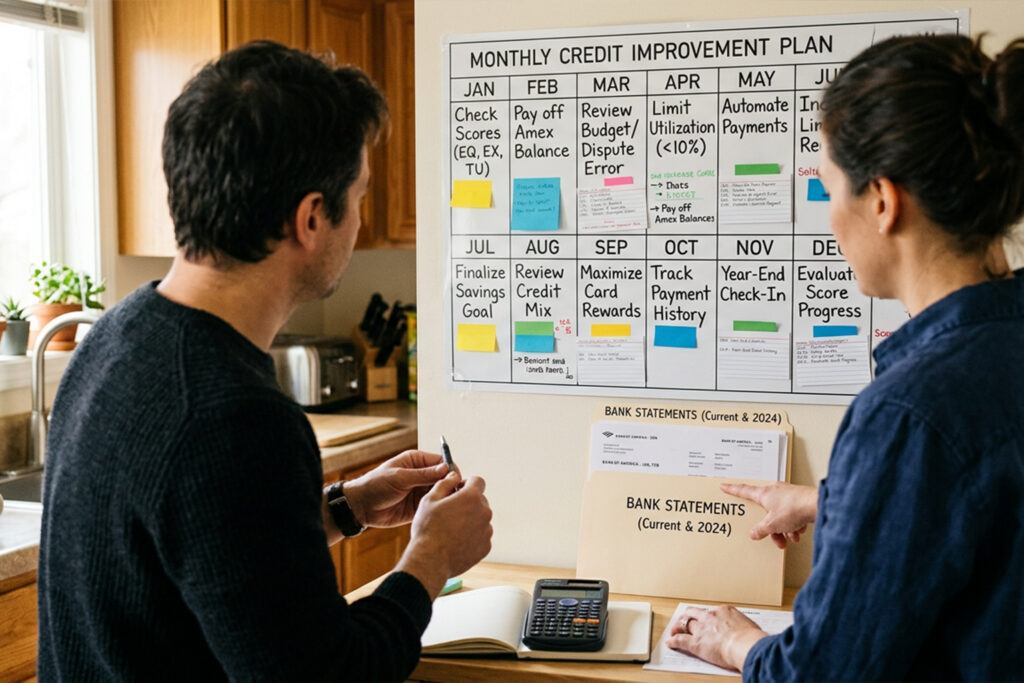
This article lays out a realistic, month-by-month roadmap you can follow for a year.
Apply these steps steadily to build measurable improvement without drastic changes.
Assess Your Starting Point
Begin by reviewing your current credit reports and scores to identify priorities and errors. Look for missed payments, high balances, unusually high utilization, and unfamiliar accounts. Establish which items are hurting your score the most so you can address them first. A clear baseline helps you set realistic monthly targets and measure progress.
Record key metrics such as total available credit, current utilization rate, and any derogatory marks. Updating this snapshot every month will reveal which actions have the greatest impact. Small, consistent reductions in utilization and timely payments will become evident over a few reporting cycles.
Prioritize On-Time Payments
Payment history is a top factor in most scoring models, so focus on making every payment on time. Automate recurring bills where possible and set calendar reminders a few days before due dates to avoid accidental lapses. If you have past-due accounts, contact creditors to arrange payment plans or settlements that may limit further negative reporting. Rebuilding positive payment records is one of the fastest ways to improve your score over time.
- Set up autopay for minimums, then add extra when feasible.
- Use payment apps or calendar alerts as backup reminders.
- Prioritize creditors that report to major bureaus.
Consistency matters more than perfection; avoid new missed payments and stay the course. Over months, on-time history will outweigh older negatives as long as you maintain good behavior.
Manage Balances and Utilization
High credit utilization can suppress scores even when payments are timely, so reduce revolving balances strategically. Aim to keep utilization below a conservative threshold and pay down the highest-interest or highest-balance accounts first. Consider making multiple payments each month to lower reported balances by statement dates. Small reductions in utilization often translate to noticeable score improvements.
- Target accounts with utilization over 30% first.
- Make payments before statement closing dates to record lower balances.
Balancing payment timing and reduction plans helps you free up available credit gradually. Over several months this approach can produce steady score gains.
Use Credit Mix and New Accounts Carefully
A diverse mix of credit types and a modest number of responsibly managed accounts can benefit your profile. Avoid opening multiple new accounts at once since inquiries and short account age can lower your score temporarily. When you need new credit, compare offers and choose products that support long-term goals, such as a low-interest card or a secure loan to build history. Think strategically about when and why to apply rather than reacting to every offer.
Maintain older, healthy accounts open to preserve account age and history. Thoughtful, infrequent new credit along with steady management will support gradual improvement.
Monitor and Dispute Errors
Regular monitoring helps you spot inaccuracies that could unfairly lower your score, such as duplicate accounts or incorrect late payments. If you find errors, file disputes with the reporting agencies and provide documentation promptly. Correcting mistakes can produce quick improvements when they are resolved. Use free monitoring tools or periodic manual checks to stay informed about changes to your reports.
Document all communications and follow up until disputes are closed. Accurate reporting paired with consistent financial habits leads to the most reliable long-term gains.
Conclusion
Steady habits produce steady score gains over time.
Track progress monthly and adjust tactics as needed.
Stay patient—consistent choices compound into stronger credit.