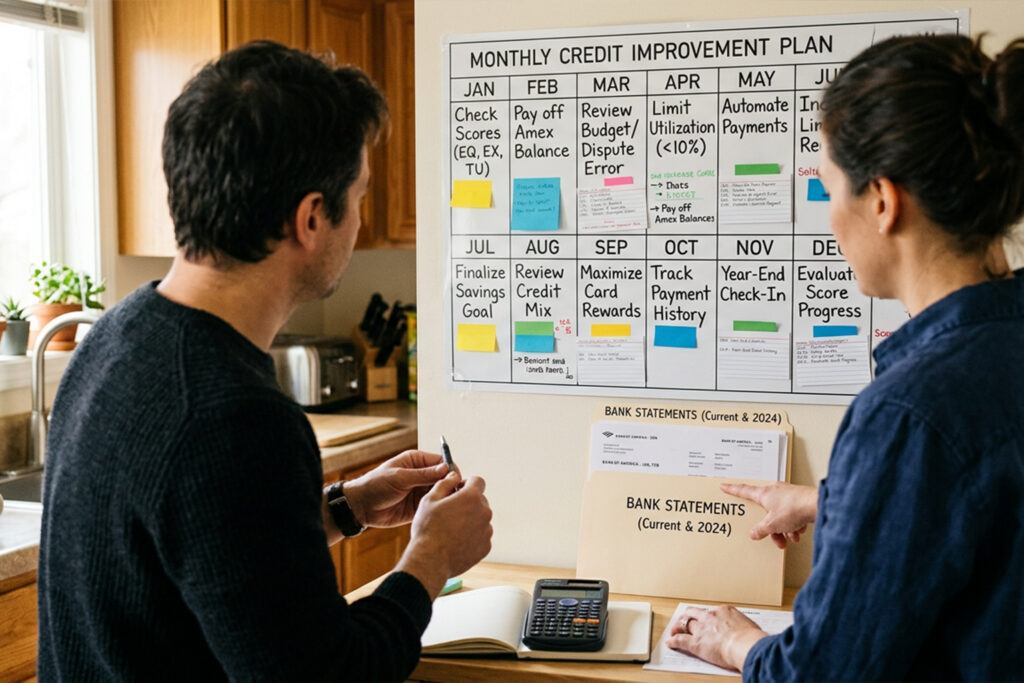
A Practical Roadmap to Better Credit in a Year

Improving your credit score is a practical process that rewards consistent habits.
Small adjustments to payment timing, balances, and credit use compound over months.
This article lays out a realistic, month-by-month roadmap you can follow for a year.
Apply these steps steadily to build measurable improvement without drastic changes.

Assess Your Starting Point

Begin by reviewing your current credit reports and scores to identify priorities and errors. Look for missed payments, high balances, unusually high utilization, and unfamiliar accounts. Establish which items are hurting your score the most so you can address them first. A clear baseline helps you set realistic monthly targets and measure progress.

Record key metrics such as total available credit, current utilization rate, and any derogatory marks. Updating this snapshot every month will reveal which actions have the greatest impact. Small, consistent reductions in utilization and timely payments will become evident over a few reporting cycles.

Prioritize On-Time Payments

Payment history is a top factor in most scoring models, so focus on making every payment on time. Automate recurring bills where possible and set calendar reminders a few days before due dates to avoid accidental lapses. If you have past-due accounts, contact creditors to arrange payment plans or settlements that may limit further negative reporting. Rebuilding positive payment records is one of the fastest ways to improve your score over time.

  • Set up autopay for minimums, then add extra when feasible.
  • Use payment apps or calendar alerts as backup reminders.
  • Prioritize creditors that report to major bureaus.

Consistency matters more than perfection; avoid new missed payments and stay the course. Over months, on-time history will outweigh older negatives as long as you maintain good behavior.

Manage Balances and Utilization

High credit utilization can suppress scores even when payments are timely, so reduce revolving balances strategically. Aim to keep utilization below a conservative threshold and pay down the highest-interest or highest-balance accounts first. Consider making multiple payments each month to lower reported balances by statement dates. Small reductions in utilization often translate to noticeable score improvements.

  • Target accounts with utilization over 30% first.
  • Make payments before statement closing dates to record lower balances.

Balancing payment timing and reduction plans helps you free up available credit gradually. Over several months this approach can produce steady score gains.

Use Credit Mix and New Accounts Carefully

A diverse mix of credit types and a modest number of responsibly managed accounts can benefit your profile. Avoid opening multiple new accounts at once since inquiries and short account age can lower your score temporarily. When you need new credit, compare offers and choose products that support long-term goals, such as a low-interest card or a secure loan to build history. Think strategically about when and why to apply rather than reacting to every offer.

Maintain older, healthy accounts open to preserve account age and history. Thoughtful, infrequent new credit along with steady management will support gradual improvement.

Monitor and Dispute Errors

Regular monitoring helps you spot inaccuracies that could unfairly lower your score, such as duplicate accounts or incorrect late payments. If you find errors, file disputes with the reporting agencies and provide documentation promptly. Correcting mistakes can produce quick improvements when they are resolved. Use free monitoring tools or periodic manual checks to stay informed about changes to your reports.

Document all communications and follow up until disputes are closed. Accurate reporting paired with consistent financial habits leads to the most reliable long-term gains.

Conclusion

Steady habits produce steady score gains over time.
Track progress monthly and adjust tactics as needed.
Stay patient—consistent choices compound into stronger credit.


Small Credit Card Changes That Improve Monthly Cashflow

Managing credit cards well is less about complicated strategies and more about small, consistent choices. By reviewing how you use cards each month, you can reduce fees and align rewards with real spending. This article outlines practical steps to assess patterns, select matching features, and build simple routines. These changes require minimal effort but can improve monthly cashflow and reduce stress around statements. Read on for clear actions you can implement in the next billing cycle.

Assess Your Spending Patterns

Begin by tracking where your card spending goes: essentials, variable purchases, and discretionary items. Look back at two or three statements to spot recurring charges and seasonal shifts, and calculate an average monthly balance. Note any interest charges or late fees that consistently appear so you can prioritize eliminating those costs. A clear picture of patterns makes it easier to choose adjustments that affect your cashflow directly.

  • Categorize transactions by purpose for one billing cycle.
  • Highlight recurring subscriptions and seldom-used services.
  • Record average balances and interest paid monthly.

Once you have that data, you can target the highest-cost behaviors first. Small reductions in interest or fees compound into meaningful monthly savings.

Choose Features That Match Habits

Not every benefit matters to every cardholder; the key is alignment. If you spend heavily in a specific category, look for cards that boost rewards there rather than broad multipliers you won’t use. Consider features that reduce outflows: low ongoing fees, balance transfer options with reasonable terms, or cashback that offsets recurring bills. Avoid chasing sign-up bonuses if they tempt you to change spending in ways that increase costs overall.

  • Prioritize cards with rewards for your top spending categories.
  • Compare fee savings versus potential rewards to find net benefit.

Selecting the right features can convert routine purchases into subtle savings. That alignment keeps monthly obligations predictable and more manageable.

Set Simple Routines and Limits

Consistency beats complexity when managing cards: schedule automatic payments to avoid late fees and set alerts for statement thresholds. Pay at least the statement balance when possible to prevent interest on purchases, and direct rewards or statement credits to cover recurring expenses. Establish a soft limit on discretionary card usage that aligns with your monthly budget to prevent surprises. These small habits protect your cashflow without demanding constant oversight.

  • Enable autopay for the minimum or full statement balance.
  • Set balance alerts and monthly spending reminders.

Routines reduce the mental load of card management and cut the most common cost drivers. With a few simple settings you can preserve flexibility while controlling monthly outflows.

Conclusion

Small, targeted adjustments to how you use credit cards can noticeably improve monthly cashflow. Focus on tracking patterns, choosing features that match real habits, and building minimal routines to avoid fees. Implementing these steps over one billing cycle creates steadier finances and less statement-related stress.

Aligning Insurance Choices with Life Stages and Goals

Choosing the right insurance is less about finding a perfect product and more about matching coverage to where you are in life and what you want to protect. As responsibilities, income, and priorities change, so do the types and amounts of insurance that make sense. A deliberate approach helps avoid gaps or redundancies that can cost time and money. This article outlines practical ways to align insurance with evolving needs and goals.

Taking a staged view simplifies decisions and supports long-term planning. The steps below focus on clarity, affordability, and flexibility to keep coverage relevant. Use them as a checklist when reviewing existing policies or shopping for new ones.

Understanding Changing Needs

Your insurance needs shift as relationships, housing, careers, and health evolve. Young professionals may prioritize renters and basic health coverage, while households with dependents often need life, disability, and higher liability limits. Later stages bring different concerns such as long-term care planning and legacy considerations. Recognizing these patterns reduces the chance of underinsurance or paying for unnecessary coverage.

Conduct a life-stage inventory every 12 to 24 months to identify gaps. Include assets, debts, dependents, and foreseeable changes when assessing needs.

Mapping Coverage to Financial and Personal Goals

Insurance should support your financial goals, not derail them. For example, coverage that replaces income can protect savings goals, while adequate liability limits preserve assets from lawsuits. Align policy terms with timelines for major goals like home ownership, education funding, or retirement. Prioritizing protection that preserves financial stability ensures progress toward those objectives even after unexpected events.

  • Identify core goals (emergency fund size, retirement target, education plans).
  • Match coverages that protect those goals (income replacement, disability, liability).
  • Adjust limits and riders as goals shift or are achieved.

Reviewing how each policy contributes to your goals makes trade-offs clearer. This process also helps when deciding whether to increase deductibles, add riders, or consolidate policies.

Practical Steps to Adjust Coverage

Begin by cataloging current policies, limits, exclusions, and renewal dates. Compare what you have against identified needs and goals to spot overlaps or shortfalls. Consider bundling where it reduces cost without sacrificing essential protections, and explore policy riders for gaps that standard plans don’t cover. Seek quotes from multiple insurers and ask targeted questions about exclusions and claim examples.

When making changes, avoid gaps in coverage and document effective dates. Small annual adjustments can prevent costly surprises later on.

Managing Costs and Ongoing Reviews

Cost management and adequacy are complementary: cheap coverage that leaves major exposures can be false economy. Use deductible choices, discounts, and loyalty opportunities to manage premiums, but re-evaluate as income and assets change. Schedule a routine policy review each year or after life events such as a new home, marriage, or career change. Professional advice can be valuable for complex situations, but basic reviews can be done independently.

Consistent review habits maintain alignment between coverage and changing circumstances. This proactive approach keeps protection effective and efficient.

Conclusion

Aligning insurance with life stages and goals creates a resilient financial foundation and reduces stress during change. Regular reviews, clear goal mapping, and practical adjustments keep coverage relevant and affordable. Start with a simple inventory and build a review habit to keep protection working for you.

Actionable Credit Score Checklist for the Next Six Months

Improving your credit score can feel overwhelming without a clear, prioritized plan.
This checklist breaks down priorities into manageable monthly tasks and realistic checkpoints.
Use the sequence to reduce risk, address errors, and build a pattern of positive account activity.
Follow these steps consistently to see measurable improvement over six months and set new habits.

Assess Your Starting Point

Begin by collecting your credit reports and current score from available sources, then record key dates and balances. Review accounts for errors, outdated information, or unfamiliar inquiries that may need disputes and supporting documentation. Note accounts with high utilization and any late payments that require remediation or negotiating with creditors. Understanding the baseline helps you set realistic targets and prioritize actions that will have the most impact.

  • Check report for incorrect personal info.
  • Identify accounts over 30% utilization.
  • List any recent late payments and their dates.

After this inventory, set a clear numeric goal and timeline. A specific target makes it easier to measure progress and stay accountable.

Prioritize High-Impact Actions

Tackle items that influence score the most first: payment history, collections, and credit utilization. Bring any past-due accounts current and create a plan to avoid missed payments, including communication with creditors when necessary. Reduce balances on revolving accounts to lower utilization to below 30%, aiming for 10–20% if possible, and focus on the highest-rate or highest-balance cards first. If you have unused accounts, avoid closing them unless necessary to preserve average age and available credit, and consider asking for credit line increases on stable accounts.

  • Set automatic payments for minimums.
  • Make two payments per month to reduce reported balances.

These actions typically yield the quickest score gains. Consistency is essential for sustained improvement, so track outcomes and tweak tactics monthly.

Build Positive Activity and Monitor Progress

Add small, regular positive behaviors like on-time payments, small credit line usage to show activity, and responsible handling of any new credit. Consider a secured card or a credit-builder loan if you lack current accounts in good standing; these tools can establish positive payment history when used responsibly. Track your score monthly and adjust strategies based on changes, seasonal spending, or life events that might affect balances and payments. Continue to dispute inaccuracies promptly and document any communications for reference; clear records speed resolutions and support future disputes if needed.

Monitor trends rather than daily fluctuations to avoid overreacting. Celebrate milestones to keep momentum and reinforce the habits that led to each gain.

Conclusion

Create a six-month plan focused on high-impact fixes and steady habits.
Review and adjust monthly, keeping disputes and payments organized.
Small, consistent actions compound into noticeable credit improvement.

Managing Multiple Credit Cards Without Increased Financial Stress

Managing several credit cards can be a useful financial tool when handled deliberately.
This article outlines practical steps to keep accounts organized and costs low.
We focus on balancing rewards, interest, and payment routines for clarity.
These ideas aim to reduce stress while improving credit outcomes.

Assess Your Card Portfolio

Start by listing each card, its interest rate, annual fee, reward structure, and typical monthly balance. Understanding these details helps you decide which cards to prioritize and which may be candidates for closure or product changes. Look for overlap in benefits and keep the accounts that best match your spending patterns. This inventory sets a clear baseline for action.

After compiling the list, rank cards by cost and value to your situation. That ranking will guide cancelations, retention, or negotiation with issuers.

Set Clear Priorities

Define what you want from your cards: cash back, travel rewards, low interest, or a long-established credit history. Align each card to a specific purpose so you avoid using multiple products randomly and missing rewards. Prioritization also makes it easier to decide which balances deserve extra payments when cash is tight. Clear goals prevent churn and reduce the risk of overspending.

When a card no longer fits a priority, consider downgrading or closing it thoughtfully to protect your credit health. Small adjustments can preserve value without adding complexity.

Practical Payment Routines

Establish a simple payment routine to avoid interest and late fees: set up autopay for statement minimums and schedule an extra payment to cover the remainder when possible. If you carry balances, target high-interest cards first while maintaining minimums on others. Use calendar alerts or a budgeting app to track due dates and payment confirmations. Consistent routines reduce stress and improve credit utilization over time.

Automating the basics leaves mental space for strategic decisions like payoff sequencing or reward optimization. Review routines quarterly to ensure they still match your cash flow.

Keep Fees and Interest in Check

Regularly evaluate annual fees, foreign transaction fees, and promotional APR expirations so unexpected costs do not erode rewards. If a card’s fee outweighs its benefits, negotiate with the issuer or shift spending to a no-fee alternative. Consider balance transfers only when the math clearly lowers interest and you can repay within the promotional period. Prudent fee management preserves the net value of any rewards program.

Small changes such as choosing no-fee cards for routine purchases can add up to meaningful savings. Stay alert to rate changes and fee notices from issuers.

Monitoring and Security

Monitor statements and credit reports regularly to catch errors, fraud, or unexpected balances early. Enable transaction alerts and review monthly activity for unfamiliar charges. Keep card information secure by using virtual card numbers where available and updating compromised details promptly. Active monitoring supports both financial control and peace of mind.

Make security checks a part of your routine so they become effortless habits. Quick weekly reviews prevent issues from growing into larger problems.

Conclusion

Organize cards by purpose, automate reliable payments, and watch fees and interest closely.
Set simple priorities and monitor activity to maintain control and confidence.
These steady practices turn multiple cards into a manageable financial advantage.

Clear Steps to Compare and Improve Supplemental Insurance

Supplemental insurance can fill gaps left by primary coverage and reduce unexpected costs. Choosing the right combination of plans requires clear priorities and a practical comparison process. This article outlines actionable steps to evaluate existing policies, compare alternatives, and plan ahead. Follow these guidelines to make informed, sustainable choices about supplemental protection.

Assess Your Current Coverage

Begin by reviewing every supplemental policy you currently hold, noting benefits, exclusions, and renewal terms. Pay attention to deductibles, maximum benefits, and any conditional riders that affect payouts. Document how often you use each benefit and the out-of-pocket expenses you still face. This baseline makes it easier to spot overlap and identify gaps in protection. Be realistic about current health patterns and typical costs.

Once you have a clear inventory, prioritize which gaps matter most to you and your budget. Focus on coverages that would otherwise create financial strain. Clear priorities guide further comparisons and limit unnecessary purchases.

Compare Plan Features and Costs

When evaluating alternatives, compare like-for-like features: benefit limits, waiting periods, provider restrictions, and premium escalation clauses. Consider both monthly cost and potential total exposure over several years. Use a simple spreadsheet to line up key attributes and calculate sample annual expenses under different scenarios. Take note of exclusions and how preexisting conditions are handled. Make sure the math reflects realistic use cases for your situation.

  • List monthly premiums for each plan.
  • Estimate likely annual benefits you would claim.
  • Calculate net cost after expected payouts.

Comparing numeric outcomes helps remove emotion from the decision and highlights true value rather than perceived security.

Plan for Changing Needs

Health and financial needs evolve, so choose options that offer flexibility without heavy penalties for adjustment. Look for plans with reasonable cancellation terms and consider short-term solutions if health conditions are likely to change. Factor in inflation for premiums and benefits over time to avoid surprises. A modestly broader policy today may avoid the need to purchase expensive coverage later. Balance current affordability with sensible future protection.

Periodic reviews—annually or after major life events—ensure your supplemental coverage remains aligned with changing circumstances. Small adjustments now can prevent larger gaps later.

When to Seek Professional Guidance

If comparisons become complex or involve multiple overlapping policies, consult a licensed advisor to clarify trade-offs and contractual language. An expert can explain nuanced provisions such as coordination of benefits, sublimits, and claim procedures. Use professional input to validate your analysis rather than replace it, and request simple, written summaries of recommendations. This reduces the risk of misinterpreting dense policy wording.

Professional advice is most valuable when potential cost differences are large or health scenarios are uncertain. The right guidance should empower your decisions, not push specific products.

Conclusion

Clear comparison, realistic scenario testing, and periodic review are the foundation of a sensible supplemental strategy. Prioritize gap areas, compare real costs, and choose flexible options that match likely future needs. Small, disciplined steps can deliver greater financial stability and confidence in retirement.

Practical Credit Planning for Measurable Score Improvement

Improving your credit score is less about dramatic moves and more about consistent, measurable planning. Small adjustments in how you manage payments, balances, and account openings can compound into meaningful gains over months. This article outlines practical steps to set targets, optimize routines, and track progress without undue stress. Use these reliable actions to build steadier credit over time.

Set Clear, Realistic Targets

Start by establishing specific, attainable goals for your score and a reasonable timeline for achieving them. Review your credit report to identify the highest-impact areas such as payment history, utilization, and account age, then prioritize actions accordingly. Break big goals into monthly milestones so progress is visible and manageable. Clear targets help you choose daily and monthly behaviors that align with long-term improvement.

Write targets into a simple tracker or budgeting tool and check them each month. This keeps choices deliberate and progress measurable.

Optimize Payment Timing and Amounts

On-time payments are the single most important factor, so automate bills when possible and aim to pay more than the minimum. Consider making one or more mid-cycle payments to lower the balance that gets reported at statement close. Reducing reported utilization is often faster than paying off a balance completely and can raise scores within a few cycles. Small, regular overpayments also reduce interest and shorten payoff time.

Automation reduces late payments and stress, while strategic extra payments accelerate improvement. These adjustments are simple but effective.

Manage Credit Utilization and Accounts

Lowering credit utilization is a direct way to improve scoring models: pay down high balances and spread charges across cards to reduce ratios. Avoid closing long-standing accounts unless fees or risks outweigh the benefit, since keeping older accounts helps the length-of-history factor. When you need more available credit, request a limit increase rather than opening new accounts, and space any new applications to minimize inquiry impact. Thoughtful account choices protect both capacity and profile health.

  • Pay highest-balance cards first to reduce utilization quickly.
  • Ask for credit limit increases if your issuer allows without a hard inquiry.

These habits maintain flexibility while improving core metrics that scoring models use. Regular review prevents small issues from growing.

Monitor and Adjust Regularly

Check your credit reports periodically and use monitoring alerts to catch errors or identity issues early. Dispute inaccuracies promptly and follow up until corrections appear; reporting fixes can yield quick benefits. Track progress against your milestones and change tactics based on measurable results, such as increasing payment frequency or shifting balances. Ongoing adjustments turn short-term wins into long-term stability.

Consistent monitoring supports smarter decisions and timely fixes. Over time this discipline builds resilience in your credit profile.

Conclusion

Start with clear targets and small timing changes to build momentum.
Monitor results and adapt your plan as balances and circumstances change.
Small, consistent actions will produce measurable credit improvements over time.

Set Simple Credit Card Rules to Protect Your Cashflow

Clear, consistent rules for using credit cards reduce stress and preserve monthly cashflow.
They help you capture rewards without adding unnecessary interest or late fees.
Rules create a predictable rhythm that supports budgeting and long-term goals.
This article outlines practical steps to set rules you can stick with each month.

Set Clear Monthly Rules

Start by defining a small set of non-negotiable rules for all card use. Decide which types of purchases go on credit, what monthly limit you will not exceed, and a target date to pay each balance. Keep the rules specific and easy to remember so you can apply them automatically. Simplicity improves adherence and reduces the chance of surprise charges or drifting behavior.

Write your rules down and put them where you see them when spending. Consistency matters more than complexity; a few reliable habits beat an elaborate plan you won’t follow.

Prioritize Payments and Billing Cycles

Match payment timing to your cashflow by arranging due dates and understanding billing cycles. Paying within the grace period avoids interest entirely on purchases, while syncing due dates with paydays prevents missed payments. When balances exist, prioritize payments by interest rate and statement date to reduce interest charges effectively. Automate minimum payments and schedule extra payments when possible to maintain momentum.

  • Pay full balances when feasible to retain rewards without interest.
  • If carrying a balance, target the highest-rate card first.
  • Use due date adjustments to group bills around paychecks.

These small scheduling changes lower overall cost and free mental bandwidth. Over time they build a stronger payment record and steadier cashflow.

Use Cards with Purpose

Assign each card a clear role based on its strengths, such as groceries, gas, or travel. This avoids scattering purchases across many accounts and makes tracking rewards and statements simpler. Keep one primary card for everyday spending and reserve others for specific categories or larger purchases. Purposeful use reduces temptation to overuse credit and improves reward capture.

Review each card’s benefits periodically to ensure roles still make sense. Consolidation is useful when a card no longer justifies its place in your wallet.

Monitor and Adjust

Regularly review statements, set alerts for unusual activity, and track progress against your rules. Quarterly check-ins let you see whether spending patterns require rule tweaks or a reallocation of card roles. Small adjustments keep the system relevant as income, expenses, or goals change. Use simple spreadsheets or apps to visualize balances and due dates for better control.

Stay flexible while protecting the core rules that support cashflow. Incremental improvements compound into clearer finances and less monthly friction.

Conclusion

Simple, written rules make credit cards predictable and useful tools for your budget.
Consistent payment timing and assigned card roles reduce costs and confusion.
Monitor and refine those rules so they keep working as your finances evolve.

Creating a Balanced Insurance Plan for Changing Needs

Choosing the right insurance mix helps protect what matters most.
A balanced plan adapts as circumstances shift over time.
This article outlines practical steps to assess, prioritize and update coverage.
Following a clear process can reduce gaps and avoid unnecessary overlap.

Identify Your Core Risks

Start by listing assets, liabilities and lifestyle factors that could lead to financial loss. Consider home, vehicle, health, income and any specialized exposures such as rental property or a home business. Quantify potential losses where possible to understand the magnitude of protection needed. Clear prioritization of risks makes it easier to match policies to real vulnerabilities.

  • Property and casualty exposures
  • Income protection and disability risks
  • Liability scenarios and legal costs

Once core risks are defined, you can narrow the types of policies and limits that matter most. This targeted view prevents overspending on low-impact coverages while ensuring critical protections are in place.

Prioritize Coverage and Deductibles

Decide which risks require full replacement-level coverage and which can tolerate higher deductibles or shared risk. Higher deductibles lower premiums but increase out-of-pocket exposure; align deductible choices with emergency savings and cash flow. Use limits and endorsements to fine-tune protection where standard policies fall short. Prioritization also helps if budget constraints mean staged improvements to coverage over time.

Balancing premium cost and financial resilience is a practical exercise, not a one-size-fits-all decision. Revisit assumptions about what you can comfortably self-insure when circumstances change.

Review and Adjust Regularly

Insurance needs evolve with life events such as moving, career changes, additions to the household or acquiring new assets. Schedule annual reviews and after significant changes to confirm coverage remains appropriate. Compare policy features, exclusions and renewal pricing to ensure continued value. Small adjustments at renewal can prevent large gaps later.

  • Major life events as review triggers
  • Benchmarking premiums and coverages annually

Regular review fosters both protection and cost efficiency, keeping your plan aligned with present realities. It also creates opportunities to bundle or consolidate when beneficial.

Conclusion

Building a balanced insurance plan starts with clear risk identification and sensible prioritization.
Regular reviews and thoughtful deductible choices maintain protection as your needs change.
An informed, staged approach reduces cost while preserving essential coverage.

Smart Monthly Routines to Strengthen Your Credit Health

Maintaining a healthy credit profile is less about dramatic changes and more about steady, repeatable habits today.
Small monthly routines can influence payment history, utilization rates, and overall financial stability.
This article outlines practical actions to include in your monthly financial checklist that support long-term credit improvement.
Adopting these steps consistently reduces surprises and builds a more resilient credit position over time.

Understand Credit Components

Knowing what factors drive your credit makes it easier to prioritize monthly tasks.
Payment history, amounts owed, length of credit history, new credit, and credit mix each play a role in scoring models.
Tracking these areas helps you focus on the highest-impact choices when planning payments and new applications.

  • Payment history: track on-time payments and past delinquencies.
  • Amounts owed: monitor balances and utilization ratios.
  • Account age and mix: be mindful before opening or closing accounts.

A quick review of these components once a month keeps priorities clear.
It also prevents small issues from escalating into larger problems that hurt scores.

Monthly Payment and Balance Habits

Timely payments are the single most important factor you can control each month.
Set automatic payments for minimum amounts and schedule manual payments for extra principal where possible.
Aim to keep credit utilization low by paying down balances before statement closing dates.
Consistent behavior here signals reliability to lenders and supports gradual score improvement.

  • Review upcoming bills and set payment reminders.
  • Pay balances or make payments before statement cycles close.
  • Avoid opening new accounts unless necessary.

These routine actions require little time and produce outsized benefits.
Make them part of a single monthly session to stay organized.

Monitor, Dispute, and Plan

Regular monitoring helps catch errors, fraud, or unexpected account changes quickly.
Obtain and review your credit report periodically, and file disputes for inaccuracies promptly.
Pair monitoring with a simple plan: goals, target utilization, and a timeline for larger fixes.

Use alerts from your card issuer and a calendar reminder for quarterly reviews.
If you find errors, follow the reporting process and keep records of correspondence.
Planning ahead reduces anxiety and creates measurable milestones toward stronger credit.

When to Seek Professional Guidance

Complex situations like identity theft, long-standing delinquencies, or bankruptcy may require expert help.
Credit counselors can help negotiate affordable plans and provide budgeting strategies.
Choose nonprofit agencies or reputable advisors who explain trade-offs and realistic timelines.

A professional can accelerate recovery but expect gradual improvement rather than instant results.
Combine guidance with your monthly routines for the best outcomes.

Conclusion

Consistent monthly routines create momentum that supports sustainable credit improvement.
Focus on timely payments, controlled balances, monitoring, and purposeful planning.
Small, well-timed actions add up to meaningful progress over months and years.