Many people are hesitant to check their credit score because they fear it might hurt their financial standing. This is a common misconception. The truth is that checking your own credit score does not lower it. But there’s a reason why this myth persists—let’s break it down.
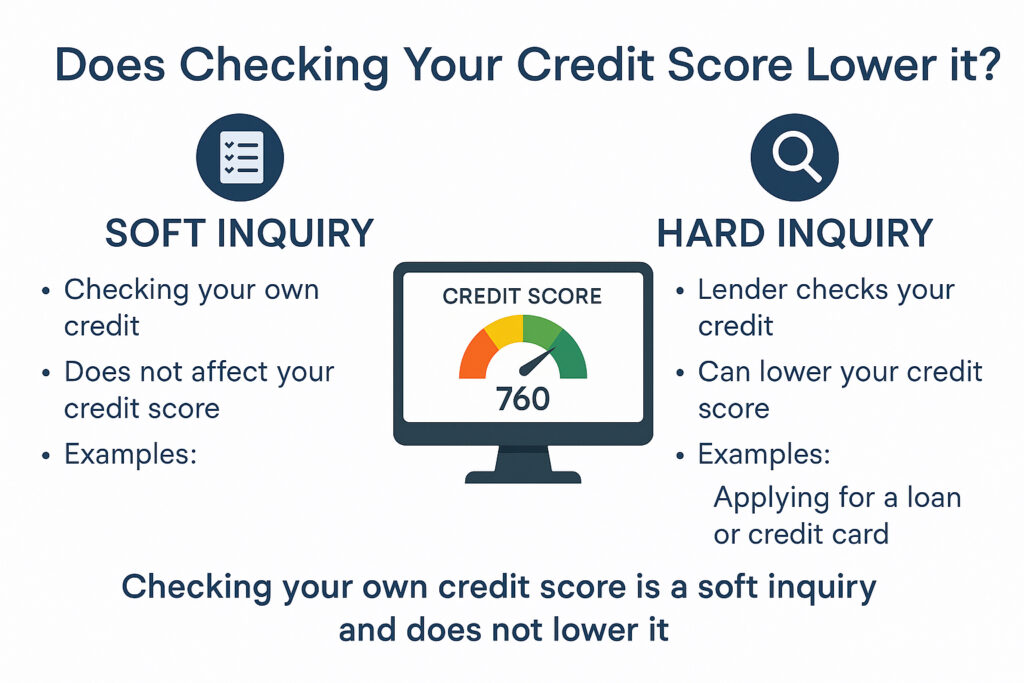
The Difference Between Soft and Hard Inquiries
When it comes to credit checks, not all inquiries are the same. There are two main types:
-
Soft Inquiries
-
Happen when you check your own credit or when companies do background checks (like pre-approvals for credit cards).
-
These checks do not impact your credit score.
-
Examples: Using a credit monitoring app, checking your score through your bank, or getting pre-qualified for a loan.
-
-
Hard Inquiries
-
Occur when a lender checks your credit report as part of a lending decision (e.g., applying for a mortgage, credit card, or auto loan).
-
These inquiries can lower your credit score slightly, usually by a few points, and may stay on your report for up to two years.
-
Multiple hard inquiries in a short time can signal risk to lenders.
-
Why You Should Check Your Credit Regularly
Far from being harmful, regularly checking your credit score is a smart financial habit. Here’s why:
-
Monitor Your Progress: Tracking changes helps you understand how your spending, debt, and payments affect your score.
-
Catch Errors: Mistakes on credit reports are common, and spotting them early can save you money and hassle.
-
Prevent Fraud: If someone opens credit in your name, checking your score and report regularly can help you catch it quickly.
How Often Should You Check Your Score?
-
Experts recommend checking your score at least once a month if you’re actively improving your credit or planning for a loan.
Final Thoughts
Checking your own credit score is considered a soft inquiry and has no effect on your credit. In fact, the more informed you are, the better decisions you can make to maintain or improve your score. The only time you need to worry about a drop is when lenders perform hard inquiries during loan or credit applications.
So go ahead—check your credit score regularly. It’s not only safe, but it’s also one of the best ways to take charge of your financial health.