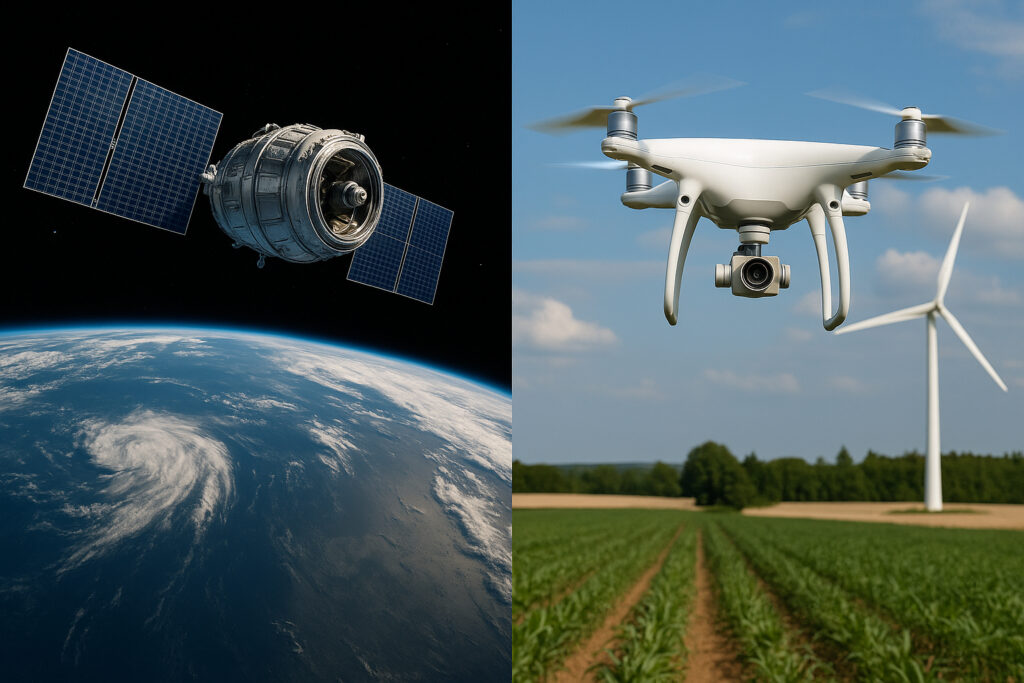
As technology advances and global risks evolve, the insurance industry is entering a new era of innovation. Space exploration, commercial drone operations, and climate-related disasters are expanding faster than traditional insurance models can keep up. In response, insurers are developing specialized coverage solutions designed to protect emerging industries and help organizations manage unprecedented levels of uncertainty.
Space Insurance for a Rapidly Growing Industry
The space sector is no longer limited to government agencies—private companies now launch satellites, explore deep space, and invest in off-world infrastructure. With these advancements comes the need for highly specialized insurance. Space insurance covers launch failures, satellite malfunctions, orbital collisions, and mission interruptions. As space becomes more commercialized, insurers are using advanced risk modeling to support safer missions and more predictable outcomes.
Drone Insurance for Expanding Commercial Use
Drones are transforming industries such as logistics, agriculture, real estate, and emergency services. However, increased drone activity brings new risks, including property damage, privacy concerns, and airspace conflicts. Drone insurance provides protection for operators by covering liability, equipment damage, data loss, and operational errors. With stricter regulations and expanding commercial use, this type of insurance is quickly becoming essential for businesses that rely on drone technology.
Climate Risk Insurance for a Changing Planet
Climate change has led to more frequent and severe events—wildfires, floods, hurricanes, and heatwaves. Traditional insurance models struggle to account for these unpredictable patterns. Modern climate risk insurance blends historical data with real-time environmental monitoring and AI predictions to assess risk more accurately. These policies help businesses protect assets, respond quickly to disasters, and invest in resilient infrastructure.
Technology Driving New Insurance Solutions
The rise of digital sensors, satellite imagery, and predictive analytics is enabling insurers to evaluate risks with greater precision. For drones, sensors monitor flight paths and environmental conditions. For space missions, data from astronomic monitoring tools helps assess collision risks. For climate-related events, AI models analyze weather patterns to forecast potential losses. These technologies allow insurers to price policies more fairly and respond more proactively to emerging threats.
Conclusion
Space, drone, and climate risk insurance represent the next frontier in protecting people, businesses, and infrastructure in a rapidly evolving world. As technology continues to advance, insurers are adapting by offering specialized solutions that address complex and emerging challenges. These innovations ensure that organizations can pursue bold new opportunities while staying prepared for the risks of tomorrow.