Improving a credit score is rarely instantaneous; it responds to steady, intentional habits. Small routine decisions around payment timing, balances, and account use can compound into meaningful gains. This article outlines practical money moves you can adopt and sustain without drastic lifestyle changes. Follow these ideas consistently and you should see gradual, durable improvement in your credit profile.
These suggestions focus on behaviors consumers control and track. They complement formal advice like checking reports and disputing errors. Think of them as an operational playbook to repeat each month. Consistency matters more than perfect execution.
Focus on Payment Consistency
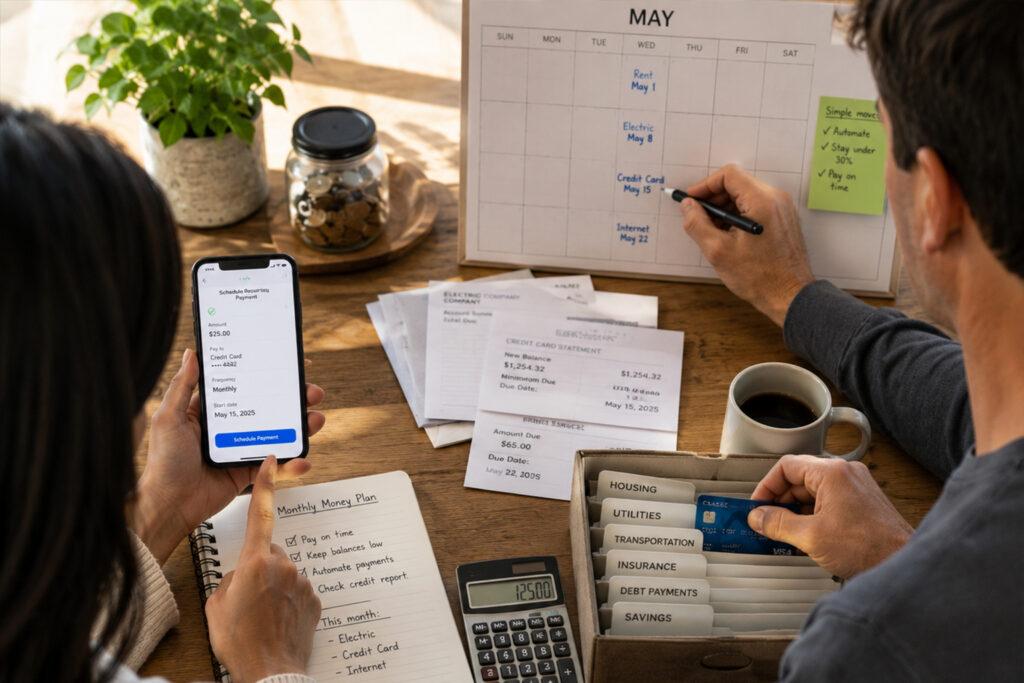
On-time payments are the single most influential habit for credit performance. Set up automatic payments or calendar reminders to avoid missed due dates and late reports. If cash flow is tight some months, prioritize required minimums to keep accounts current. Over time, a clean payment record builds momentum and credibility with lenders.
Start by reviewing due dates across accounts and aligning them to your pay schedule. Even small shifts can reduce accidental lapses. A reliable payment history is foundational and simple to maintain.
Keep Balances Low Relative to Limits
Credit utilization — the ratio of balances to limits — plays a major role in scoring models. Aim to use only a modest portion of available credit, ideally well under half and preferably below a third. Paying down balances before statement dates can lower reported utilization and improve monthly results. Consistently low utilization signals responsible account management to creditors.
- Check statement dates and plan payments accordingly.
- Target rotating payments to high-balance accounts first.
- Consider small limit increases only if you won’t increase spending.
Regular attention to utilization keeps your profile efficient without changing spending habits drastically. Small reductions add up over a few reporting cycles. Combine this with on-time payments for best effect.
Use Accounts Strategically and Sparingly
Maintaining older accounts and using them occasionally helps age and activity metrics. Avoid closing long-established accounts unless there’s a compelling reason. When opening new credit, do so thoughtfully because multiple inquiries can temporarily affect scores. Use credit cards for routine, budgeted purchases and repay them promptly to show responsible usage.
Balance the benefits of available credit and account age with the need for flexibility. A small number of well-managed accounts often outperforms many neglected ones. Adopt a simple rule for any new application: will it help within the next year?
Monitor Progress and Adjust
Regularly review your credit reports and free score snapshots to understand how actions translate into results. Look for errors, unexpected inquiries, or accounts that need attention and address them promptly. Small course corrections—like shifting payment timing or trimming a balance—can change trends within a few months. Treat monitoring as an ongoing part of your routine, not a one-time task.
Set monthly checkpoints and note changes to prioritize next steps. Over time this habit turns reactive fixes into proactive improvements. Clear visibility reduces surprises and supports steady growth.
Conclusion
Improving credit is a process of repeated, sensible choices that compound over time. Keep payments consistent, manage utilization, and use accounts with intention. With steady monitoring and small monthly adjustments, your credit score can steadily improve.