Understanding Riders and Add-ons in Insurance Policies

When buying insurance, many people focus only on the core policy. However, most insurers also offer riders and add-ons—optional features that enhance coverage. Choosing the right ones can make your policy more comprehensive and tailored to your needs.

Riders are additional benefits that you can attach to your existing insurance plan for an extra premium. Common examples include accidental death benefit, critical illness cover, waiver of premium, and income benefit riders. For instance, a critical illness rider ensures that you receive a lump sum if diagnosed with specified serious illnesses, providing financial support beyond hospitalization costs.

These add-ons allow you to customize your policy. Instead of buying separate insurance products for different risks, you can enhance your base plan with selected riders. This often works out to be more affordable and convenient. However, it’s essential to avoid overloading your policy with unnecessary riders, as they increase premiums and may not align with your actual risk profile.

The choice of riders should depend on your lifestyle, occupation, and family’s financial needs. For example, someone with a high-risk job may benefit more from an accidental death rider, while a family with a history of critical illnesses may prioritize a critical illness add-on.

Conclusion
Riders and add-ons transform a basic insurance plan into a customized safety net. By carefully selecting the ones that match your risks and financial goals, you can maximize protection without overspending.


How to Spot and Report Suspicious Credit Card Activity

Credit card fraud and unauthorized use remain significant concerns. Spotting suspicious activity early and reporting it promptly can prevent financial loss and identity theft.

  • Common Signs of Suspicious Activity:

    • Unrecognized transactions or charges on statements.

    • Multiple small transactions in a short period.

    • Unexpected decline of transactions despite available credit.

    • Notifications about password resets or changes you did not initiate.

  • Monitor Regularly: Regularly reviewing credit card statements and using mobile alerts for every transaction helps detect fraud early.

  • Protect Your Card Information: Avoid sharing card details and be cautious when using cards online or in unfamiliar places.

  • Report Immediately: Contact your card issuer or bank immediately if you notice any suspicious transactions. Most banks provide 24/7 fraud helplines.

  • Freeze or Block Your Card: Temporarily freezing the card through the bank’s app or customer service can prevent further unauthorized use while the issue is resolved.

  • File a Police Report if Necessary: For significant fraud cases, a police complaint helps in investigations and formal documentation.

  • Use Fraud Protection Services: Some credit cards come with fraud detection and zero-liability policies, offering additional security and peace of mind.

Being vigilant and proactive is key to protecting your financial health in the digital age.

Different Types of Credit Cards and Their Benefits

Credit cards come in various types, each designed to suit different spending habits and lifestyle needs. Choosing the right card can maximize benefits and rewards.

  • Basic Credit Cards: Ideal for everyday spending with low or no annual fees. They provide rewards points on general purchases and discounts on common expenses like dining and movies.

  • Rewards Credit Cards: Offer points or cashback on every purchase, which can be redeemed for gifts, discounts, or statement credits. Some cards specialize in rewarding specific categories such as groceries or online shopping.

  • Travel Credit Cards: Designed for frequent travelers, these cards offer airport lounge access, flight ticket discounts, travel insurance, and reward points on travel bookings. They can also provide benefits like free hotel stays and concierge services.

  • Premium Credit Cards: These come with higher credit limits and enhanced perks like exclusive event access, concierge service, and complimentary airport lounge access. They usually require a higher income and offer lifestyle-related benefits such as golf and wellness discounts.

  • Co-branded Credit Cards: Issued in partnership with brands, airlines, or retailers, these cards offer extra rewards and benefits when used within the partner network, such as extra air miles or shopping discounts.

  • Fuel Credit Cards: Focused on fuel purchases, these cards provide cashback or discounts at petrol pumps and can offer additional rewards on other categories.

Emerging Insurance Trends to Watch in 2025

Emerging Insurance Trends to Watch in 2025

The insurance industry in 2025 is navigating multiple forces reshaping the landscape, from climate change and cybersecurity to technological innovation and regulatory shifts. Here are key trends to watch:

1. Advanced Technology and Data Capabilities

Artificial intelligence, machine learning, and big data analytics are transforming risk assessment, underwriting, and claims management. Generative AI is accelerating these capabilities, enabling more precise pricing and improved customer experiences.

2. Personalization and Flexible Products

Consumers demand simpler, more personalized insurance options, such as usage-based auto insurance, hybrid life insurance products, and policies bundled with lifestyle services. Embedded insurance integrated into retail or travel purchases continues to grow.

3. Climate and Cyber Risk Focus

Increasing climate-related events drive the need for innovative property policies offering climate protections and anticipatory safety tips. Cyber insurance expands to cover evolving digital threats with dynamic policy models.

4. Regulatory Complexity and Global Fragmentation

Stricter regulations in Europe and varied global standards increase compliance costs and operational challenges. Firms must manage cross-jurisdictional differences while maintaining transparency and customer privacy.

5. Transformation of Workforce and Operations

Automation and digitization create lean, agile insurance operations, improving efficiency and customer outcomes. Building a culture of innovation and AI empowerment boosts employee engagement and sustainable growth.

6. Growth in Retirement and Life Insurance

Demand for consumer retirement solutions and commercial retirement plans rises. Customized annuities and hybrid products diversify portfolios, responding to aging populations and evolving customer needs.

7. Expansion of Private Credit Investment

Insurers diversify assets by increasing private credit investments, balancing long-term stable cash flows against risks like credit concentration and liquidity challenges.

How to Rebuild Credit After a Financial Setback

Financial setbacks can happen to anyone—whether due to job loss, unexpected medical bills, or overspending. While these challenges may negatively affect your credit score, the good news is that recovery is possible with consistent effort and smart financial decisions. Rebuilding your credit won’t happen overnight, but with patience and the right strategies, you can get back on track.

1. Review Your Credit Report

Start by pulling your credit report from the major credit bureaus. Check for errors such as incorrect balances or outdated accounts, as these can drag your score down unnecessarily. Dispute inaccuracies immediately to ensure your report reflects your actual financial standing.

2. Pay Bills on Time

Payment history is one of the most significant factors influencing your credit score. Set reminders or automate payments to ensure you never miss due dates. Even small, consistent on-time payments can make a big difference over time.

3. Reduce Outstanding Debt

Focus on lowering your credit card balances and paying down loans. Try using the debt snowball method (paying off the smallest debts first) or the avalanche method (tackling high-interest debts first). Both strategies help reduce your credit utilization ratio, a critical factor in improving your score.

4. Consider a Secured Credit Card

If traditional credit options are limited, applying for a secured credit card can help. With these cards, you make a cash deposit that serves as your credit limit. Responsible use—making small purchases and paying them off in full—can rebuild your credit profile.

5. Avoid Closing Old Accounts

Even if you’re not using certain credit cards, keeping them open can benefit your credit score by maintaining a longer credit history and higher available credit. Just make sure they don’t carry annual fees.

6. Be Patient and Stay Consistent

Rebuilding credit takes time, usually several months to a few years, depending on your financial situation. Focus on steady improvement, avoid quick-fix schemes, and remind yourself that every positive financial choice adds up.

Final Thoughts

A financial setback doesn’t have to define your future. By taking deliberate steps—reviewing your credit, paying on time, reducing debt, and building healthy financial habits—you can rebuild your credit score and regain financial stability. Think of this journey as an opportunity to establish stronger, more sustainable money management practices for the years ahead.

How Technology Is Transforming the Insurance Industry

Technology is reshaping the insurance sector by streamlining processes, enhancing customer experience, and improving risk assessment.

  • Digital Claims and Paperless Policies: Advances such as cloud-based platforms and mobile apps now allow users to file claims, track status, and receive payouts quickly and securely. Real-time document uploads speed up approvals and reduce paperwork.

  • Personalized and Usage-Based Insurance: Data analytics and AI enable insurers to offer customized policies, such as usage-based motor insurance, where premiums are based on driving habits tracked by sensors, or personalized health plans that adapt to lifestyle factors.

  • AI-Powered Customer Service: Chatbots and virtual advisors help customers navigate policy selection, claims, and queries, delivering instant, accurate support while freeing human agents for complex cases.

  • Risk Assessment and Fraud Prevention: Big data analysis and machine learning improve accuracy in risk profiling, reducing fraud and helping insurers manage claims more efficiently.

These innovations are making insurance more accessible, affordable, and user-friendly, ensuring that individuals and families are better protected in a rapidly changing world.

The Benefits of Life Insurance at Every Stage of Life

Life insurance is a powerful financial tool that adapts to your needs as you progress through different phases of life. Starting early allows you to lock in lower premium rates and enjoy broader coverage, while later in life, specialized policies can offer legacy planning or financial support for loved ones.

  • Young Adults (18–25): Even with few financial responsibilities, purchasing a term insurance policy early is cost-effective and provides a financial safety net. Parents may also use child insurance plans to secure funding for education or major life milestones, and early-term plans help build long-term security.

  • Early Career & Family (25–35): Life insurance becomes crucial for those with dependents, loans, or new family members. Consider a combination of term plans for protection and ULIPs (Unit Linked Insurance Plans) for wealth creation, balancing coverage with investment returns.

  • Midlife (35–50): With increasing responsibilities such as children’s education, home or car loans, and healthcare needs, comprehensive insurance can safeguard your family’s financial future. Flexible plans allow you to adjust coverage as needs grow.

  • Retirement & Beyond (50+): Policies focusing on regular income and medical expense coverage, such as annuities or senior citizen plans, provide stability. Life insurance helps streamline estate planning, support surviving family, and ease medical costs.

Throughout each stage, life insurance offers peace of mind, helping you and your loved ones navigate life’s uncertainties with confidence and financial security.

How to Dispute Errors on Your Credit Report

Your credit report is a snapshot of your financial health, and even small errors can hurt your credit score. These mistakes can result from clerical errors, outdated information, or even identity theft. Fortunately, you have the right to dispute inaccuracies and get them corrected.

Step 1: Get a Copy of Your Credit Report

Start by requesting a free copy of your credit report from major bureaus like Experian, Equifax, or TransUnion. Review it carefully for incorrect personal details, wrong account balances, duplicate accounts, or unfamiliar debt.

Step 2: Identify and Document the Errors

Make a list of all errors you find. Gather proof, such as bank statements, payment confirmations, or correspondence with lenders, to support your dispute. Documentation strengthens your case and speeds up the correction process.

Step 3: File a Dispute

You can file disputes online, by phone, or by mail. Clearly explain the issue, attach supporting documents, and request that the bureau investigate. By law, they must respond within 30–45 days.

Step 4: Follow Up

Once the bureau investigates, they will provide a written response. If the correction is made, your credit score may improve. If not, you can add a personal statement to your report explaining the situation.

Why Young Adults Should Start Building Credit Early

Building credit early in life is one of the smartest financial moves young adults can make. Although it might seem unimportant at first, establishing a positive credit history sets the foundation for numerous financial opportunities and benefits in the future.

1. Easier Approval for Rentals and Utilities

Landlords and utility companies often check credit reports before approving rental applications or service accounts. Having a good credit history shows responsibility and lowers the chances of needing a cosigner or paying a higher security deposit.

2. Access to Better Loans and Credit Cards

Banks and financial institutions look at credit scores when approving loans or credit cards. A strong credit history increases the chances of getting approved and qualifying for products with lower interest rates and better terms, saving money in the long run.

3. Lower Insurance Premiums

In many states, credit scores can influence insurance rates, including car insurance. Good credit often means lower premiums, which results in significant savings over time.

4. Improves Job Prospects

Some employers conduct credit checks as part of their hiring process to assess candidates’ financial responsibility. Building good credit early can prevent any negative impact on employment opportunities.

5. Helps Refinance or Secure Loans in the Future

Whether it’s student loans, mortgages, or car loans, a good credit history can help refinance existing loans at lower interest rates, making repayments more affordable.

How to Build Credit Responsibly

  • Start with a student or secured credit card at age 18.

  • Make payments on time and keep balances low.

  • Monitor credit reports for errors regularly.

  • Avoid opening too many accounts simultaneously.

  • Understand credit utilization and aim to keep it under 30%.

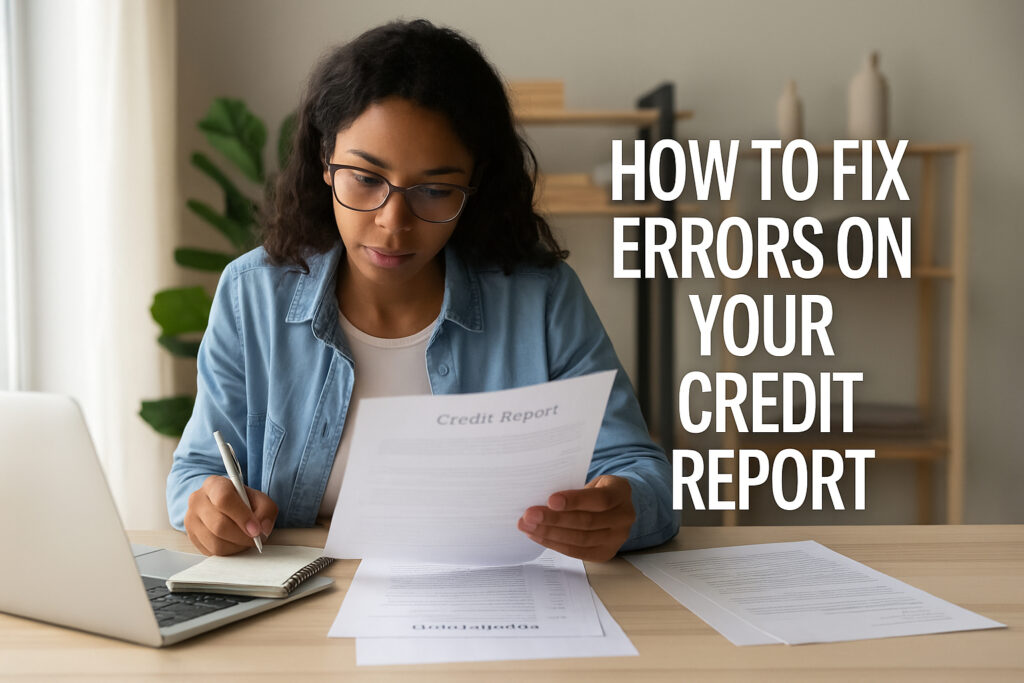
How to Fix Errors on Your Credit Report

Your credit report plays a vital role in your financial life. Lenders, landlords, and sometimes even employers use it to evaluate your reliability. But what happens if your report contains errors? Even small mistakes—like a misspelled name or an incorrect late payment—can hurt your credit score and limit opportunities. The good news is you have the right to dispute and fix these errors. Here’s how.

1. Get a Copy of Your Credit Report

Start by reviewing your credit reports from all major credit bureaus (Experian, Equifax, and TransUnion). In many countries, you’re entitled to one free report per year from each bureau through official channels.

2. Identify Errors

Look closely for mistakes such as:

  • Incorrect personal information (name, address, or Social Security number)

  • Accounts that don’t belong to you

  • Wrong payment history (late payments marked incorrectly)

  • Duplicate accounts

  • Outdated debts that should have been removed

3. Gather Supporting Evidence

Collect documents to prove the error, such as bank statements, payment confirmations, or correspondence with creditors. Having evidence strengthens your dispute.

4. File a Dispute with the Credit Bureau

Submit a dispute online, by mail, or by phone with the bureau reporting the error. Clearly state what’s wrong, why it’s incorrect, and include your supporting documents. Be concise and professional.

5. Contact the Creditor Directly

In addition to the bureau, notify the lender or creditor that provided the incorrect information. They are legally required to investigate and correct any inaccuracies.

6. Follow Up and Track Progress

Credit bureaus usually investigate disputes within 30 days. They’ll notify you of the results and provide an updated copy of your report if changes are made. Keep records of all communication in case you need to follow up.

7. Monitor Your Credit Regularly

After fixing errors, continue checking your credit reports periodically. Ongoing monitoring helps you catch mistakes early and protects you from identity theft.

Final Thoughts

Errors on your credit report can feel frustrating, but they’re fixable. By reviewing reports regularly, disputing inaccuracies, and providing proof, you can protect your credit score and ensure your financial profile is accurate. Remember—your credit history is your responsibility, and taking proactive steps ensures it reflects the real you.